


🎫 What we learned from Christian Idiodi — and from our community.
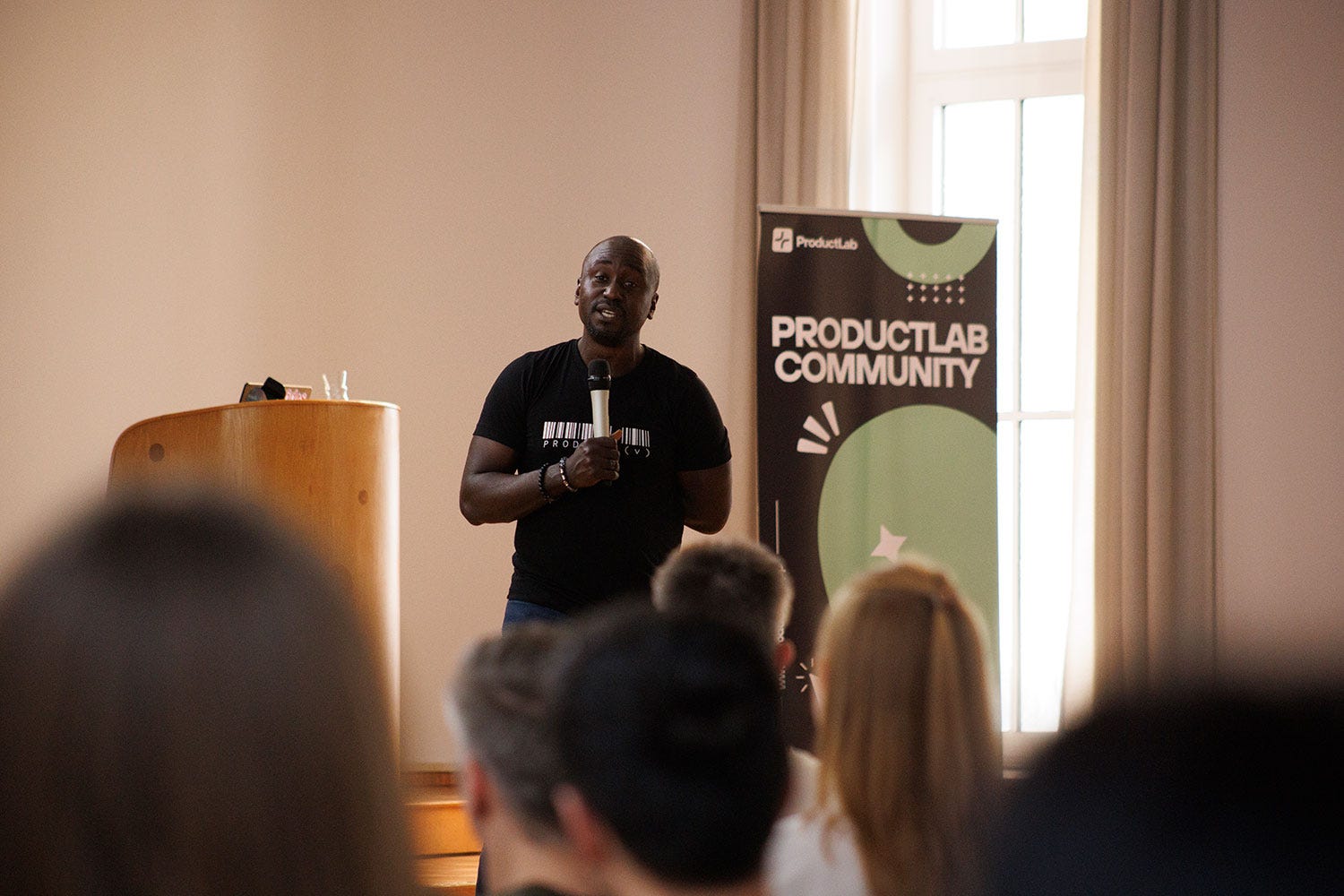
Last week Christian Idiodi, Partner at Silicon Valley Product Group and co-author of Transformed*, came to Berlin for one of our most electric meetups yet: Product Management in the Generative AI Era. Sponsored by mobile.de and Miro. What follows is less a recap than a reflection, stitched together from what the room wrote down afterwards.*
“If we want things to stay as they are, things will have to change.”
Giuseppe Tomasi di Lampedusa, The Leopard
Lampedusa named the paradox of every technology revolution a century before generative AI. Everything must change so that everything can stay the same. The tools turn over completely, the workflows become unrecognizable, and yet the thing that actually matters underneath stays exactly where it was.
For product people, that thing has always been business outcomes. Not output. Not velocity. Not how many things we shipped. Value that customers will pay for, and viability for the business that serves them. This is Christian’s quiet argument: the AI era doesn’t rewrite the job. It raises the stakes on whether we remember what the job was.
The seduction of the builder economy
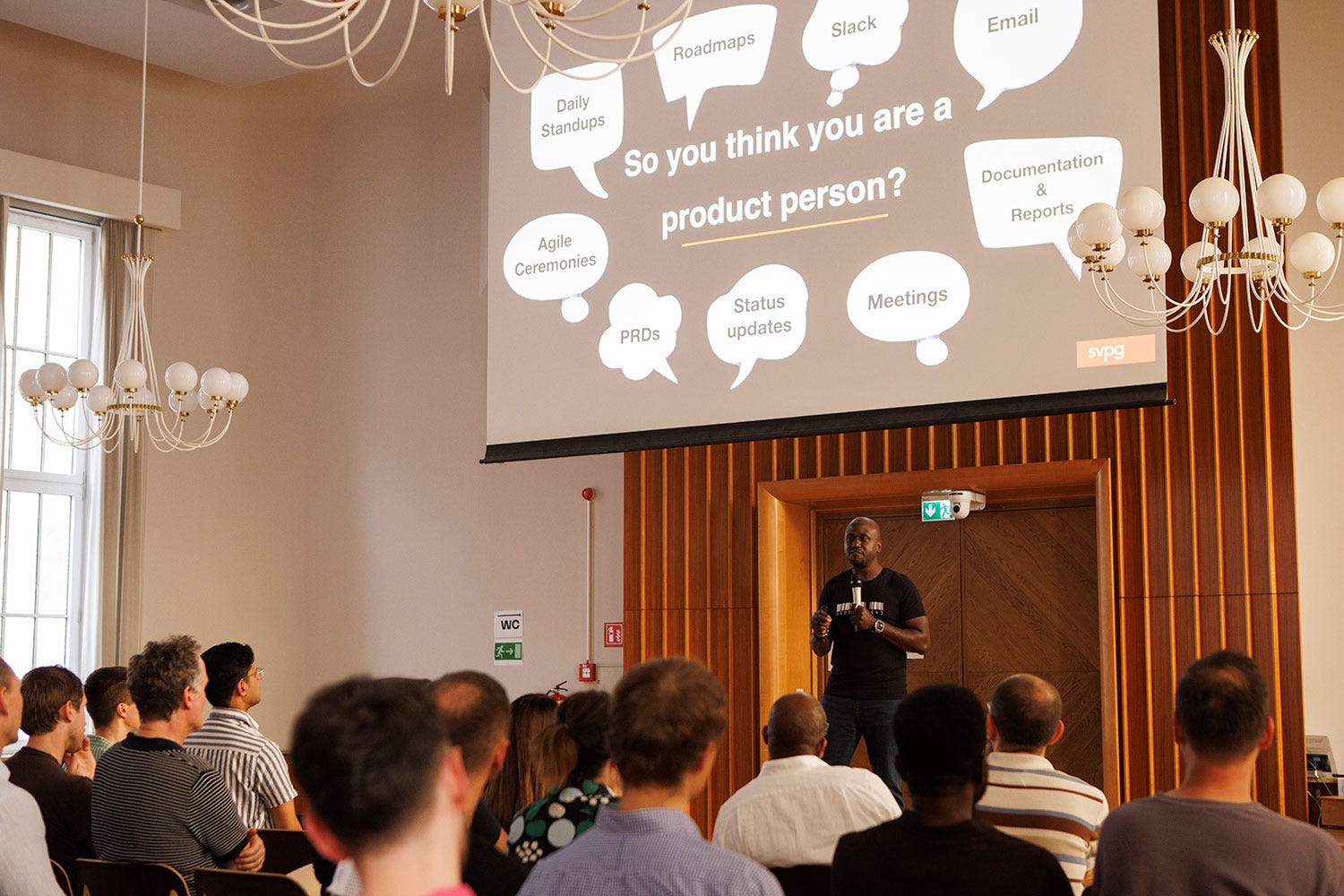
Here is what’s seductive. The builder economy tells us we can all build now. It’s easy. It’s fun. It makes us feel smart. Type a prompt, watch a prototype appear, ship something that would have taken a team a quarter.
But we’ve been here before. The internet was going to make everyone a publisher. The cloud was going to make everyone an architect. Mobile was going to put a software company in every pocket. Social media made us all photographers, each of us suddenly carrying a better camera than a 1990s professional.
And what happened? Instagram made us all photographers, but it didn’t create armies of new professionals. It created an influencer economy, new marketing channels, new ways to distribute attention. The democratization of the tool didn’t democratize the craft. It changed what the craft was worth and where the scarce skill moved to. The builder economy is the same story, one more time. Making building cheap doesn’t make good judgment cheap.
The aftermath: everyone looks smart, fast
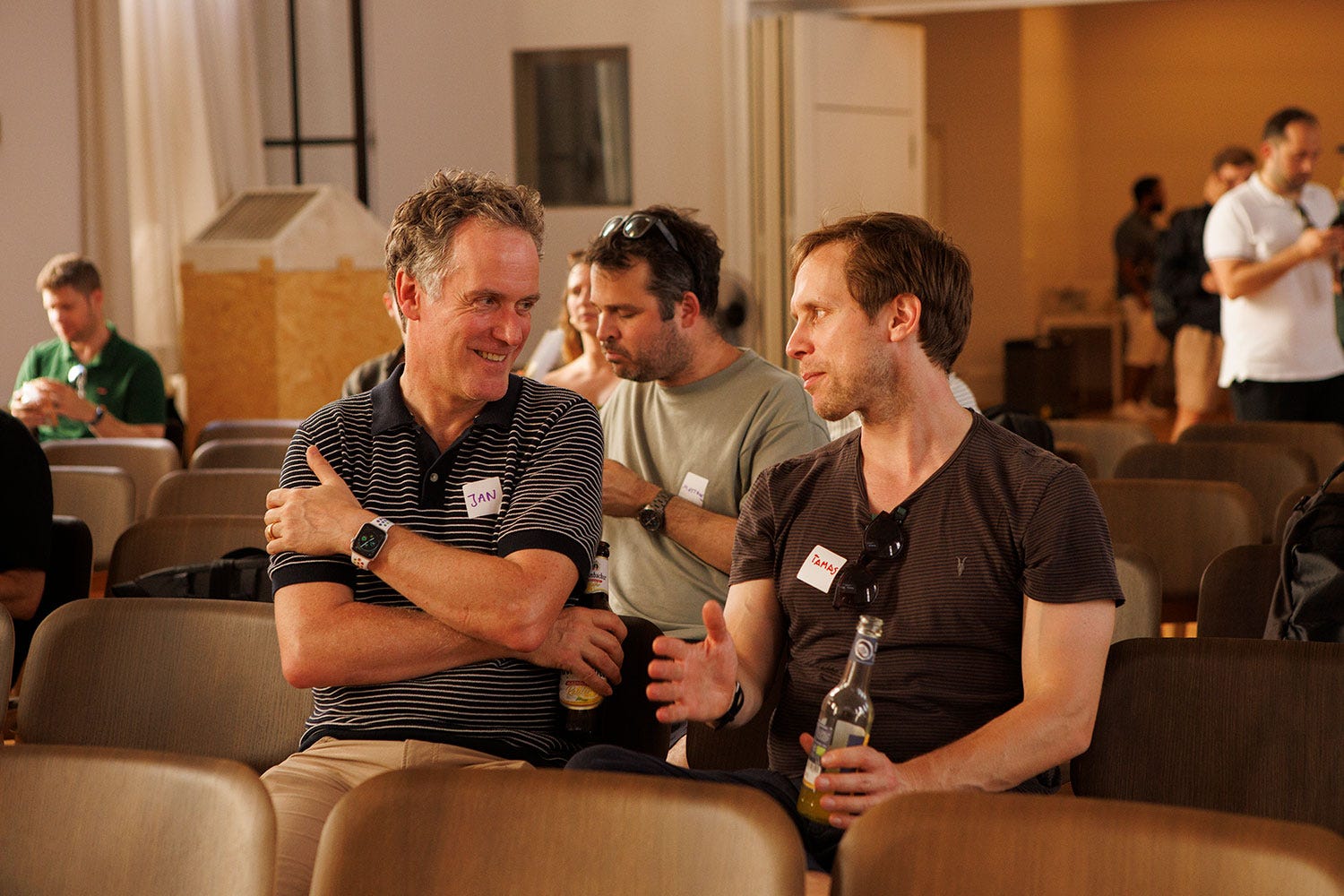
This is the part that should make every product person uneasy. As Christian put it, and as Vladimir Liashenko wrote in the Productlab recap afterwards, AI gives you higher output, but it does not guarantee higher outcomes. That gap is on the product model to secure. If your model is broken, AI doesn’t fix it. It amplifies the dysfunction at speed.
So the aftermath is strange: everyone seems smart, everyone is moving fast, the prototypes are flowing ten and twenty and thirty in a week. The mechanical work got cheap, and we got a flood of look-alike products to prove it. But the thinking got more expensive, not less. And in the rush of output, the quiet danger is that we forget we were never supposed to be output people. We were supposed to be outcome people.
Miruna Popa caught the mood in one line Christian dropped: “We’re using AI to accelerate our misery.” The whole room laughed, because everyone felt it. Her reframe is the antidote: you don’t need to know which of your twenty ideas is best. You need to know which five are worst, and kill them. Ideas were never scarce. The discipline to experiment across them, and to stop when the data answers, is what’s scarce.
Change everything to keep the one thing
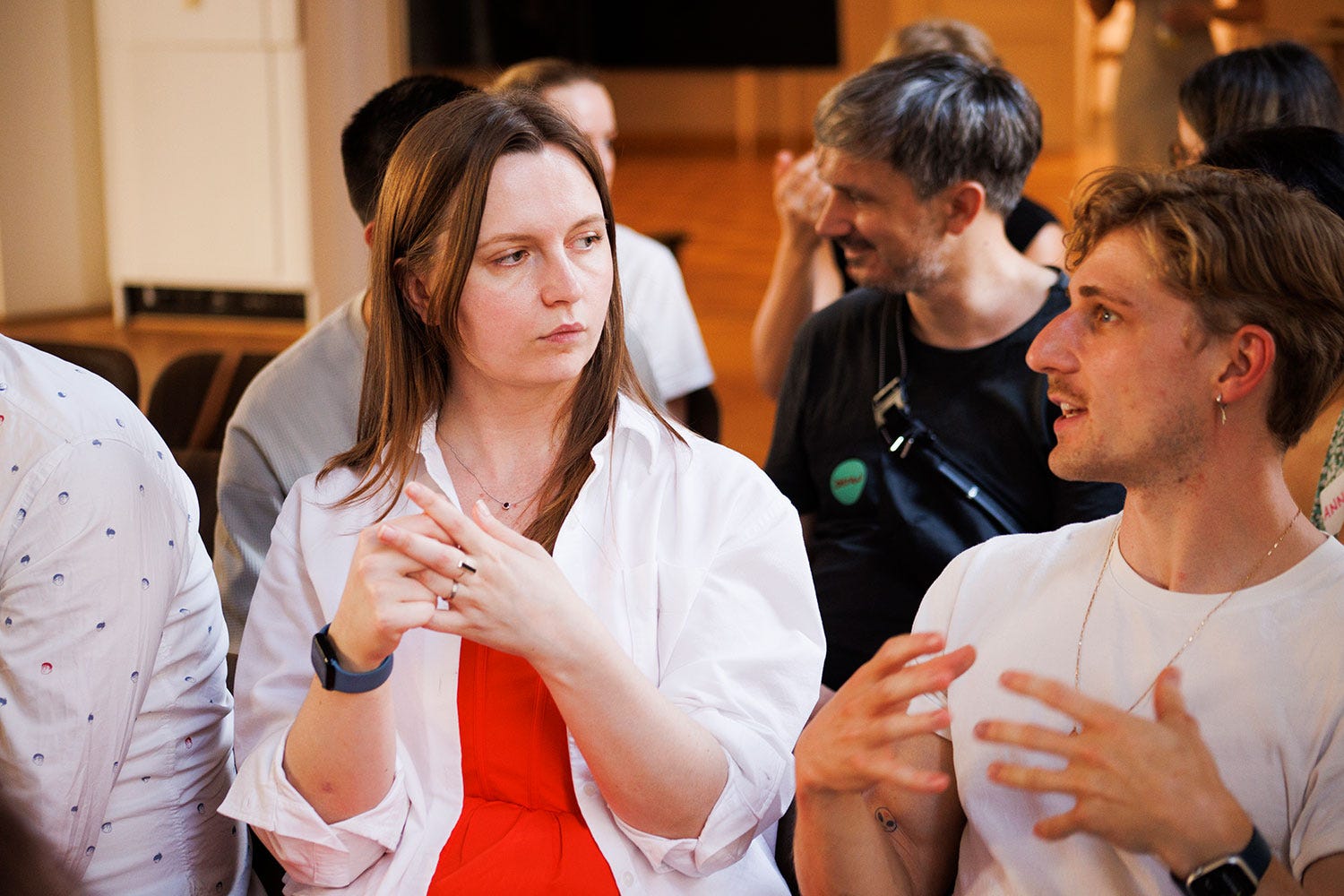
So how do you change everything in order to keep the one thing? The community’s notes converge on a surprisingly old answer.
Subir Paul reminded us that when Product Management was invented in 1931 by Neil McElroy, later P&G president and US Secretary of Defense, the role had four duties: Brand Advocate, Market Analyst, Sales Support Lead, Business Owner. Not one was a delivery task. Over the decades, as PMs got buried in sprint planning and backlog grooming, the strategic core got handed off to “the business.” Now AI is automating the admin, and the reckoning is simply this: we go back to what the job always was.
Christian’s framing for how gave the room two modes, the way Tural Nabizade captured it. First, build to learn: use AI to prototype heavily and cheaply, to test whether your solution actually solves the problem. Then, once you have clarity, build to earn: ship commercial-quality product as fast as the new tools allow. The mistake of the builder economy is to collapse the two, to do a great deal of fast building that earns nothing. And underneath both modes, the line PMs needed to hear most: value and viability are on us. Engineers and designers own usability and feasibility. No one else owns the risk of whether we picked the right problem.
Maybe that’s why so many said a version of the same thing afterwards. Alexander Tikhomirov put it best: Christian didn’t say a single thing they hadn’t heard before, and it still changed what they’d do that week. The SVPG principles are easy to nod at and hard to live by. What Christian does is drag the idealized picture back into the real world of deadlines and roadmaps, and show that behind every principle sit concrete, doable instructions. Deliver. Earn trust. Show by example that work can go differently. And always, always, think about the value people will actually pay for. Asked what he’d tell a founder with no money and a mountain of tasks, his answer was blunt: use every capability AI gives you to run as many experiments as you can, and find product-market fit as fast as possible.
The ride ahead
The builder economy isn’t the enemy. Cheap building is a gift, if you remember what it’s for. AI made the output trivial precisely so that the outcome could become, once again, the only thing that distinguishes us. Everything had to change for that one thing to stay the same.
That’s the conversation we’re carrying into the Productlab Conference this September. If half the talks are as good as this one, we’re in for a great ride. Huge thanks to Christian for extending his trip to be with us, to mobile.de and Miro for sponsoring, and to everyone who made the room what it was.
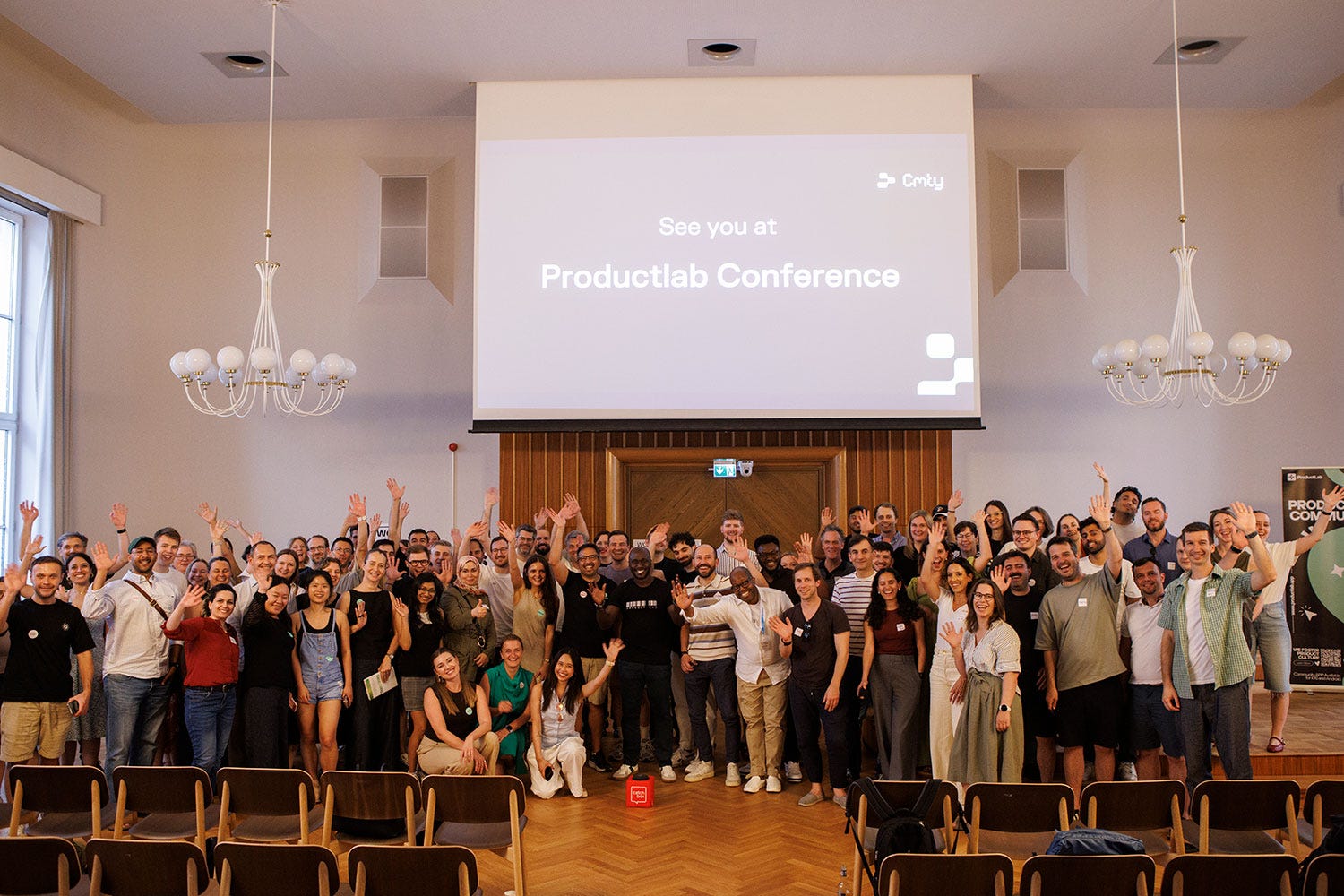
PS: We asked Christian the Slides, and we might get them in the upcoming weeks.
🥇 Two ways into Berlin this September
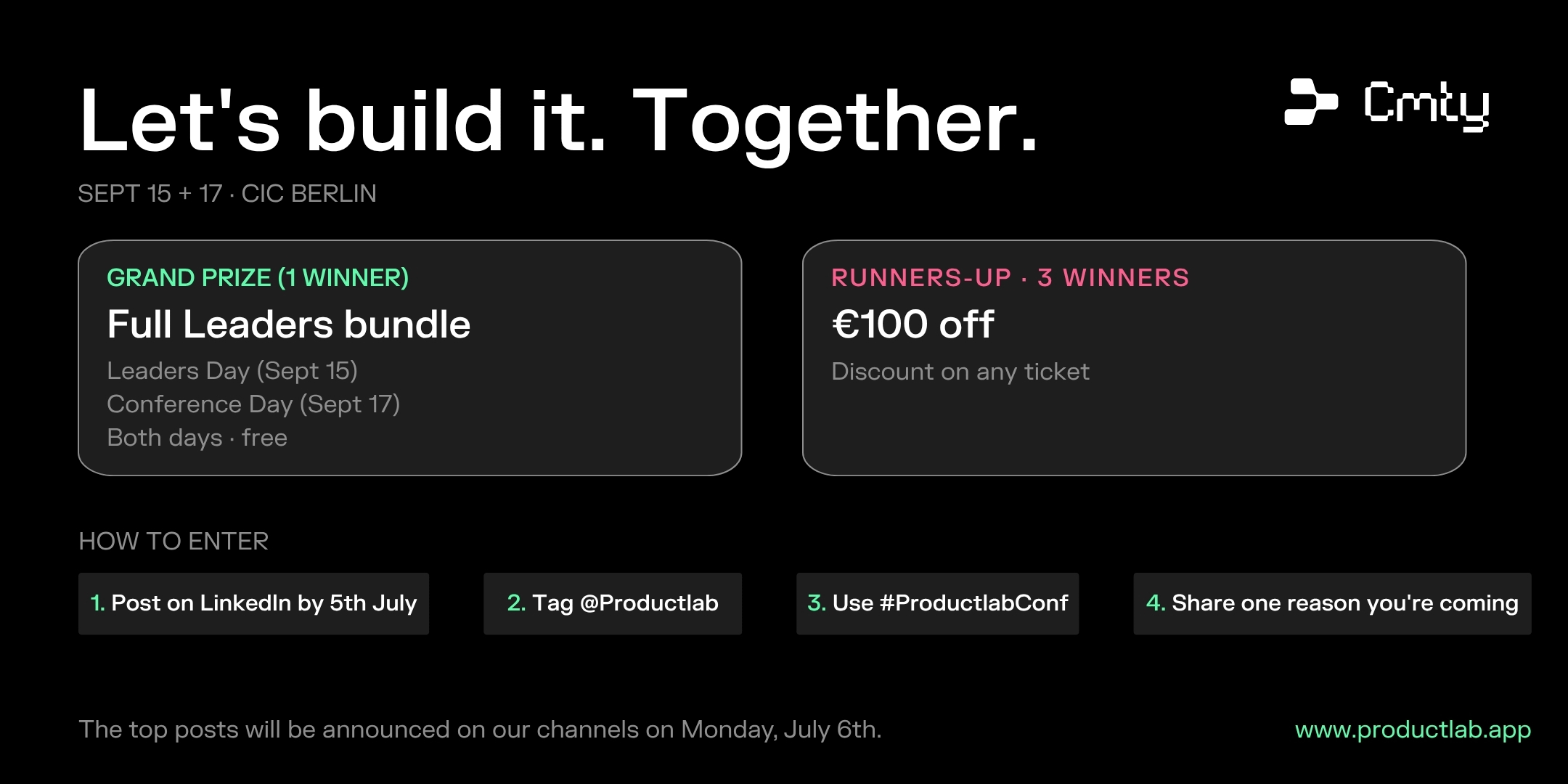
Productlab Conference 2026 lands September 15-17 at CIC Berlin: three days with 350 of Europe’s senior product leaders. We just opened two ways in, depending on how you like to move.
Bring your team. Group pricing now starts at 3, and when you bring 4 the 5th is on us. Ten bundles only, summer-only. Built for teams who plan their learning together.
No L&D budget? Win your seat. Post on LinkedIn before July 5, tag @Productlab, add #ProductlabConf, and share one reason you’re coming.
One winner takes the full bundle free (AI-Craft Day + Conference Day).
Ten runners-up get €100 off. Winners announced July 6.
That’s the whole idea: those who can, bring their people. Those who’d rather spread the word, win their way in. Sharing is Caring. ❤️
🤝 Want to join the behind-the-scenes crew at ProductLab 2026?
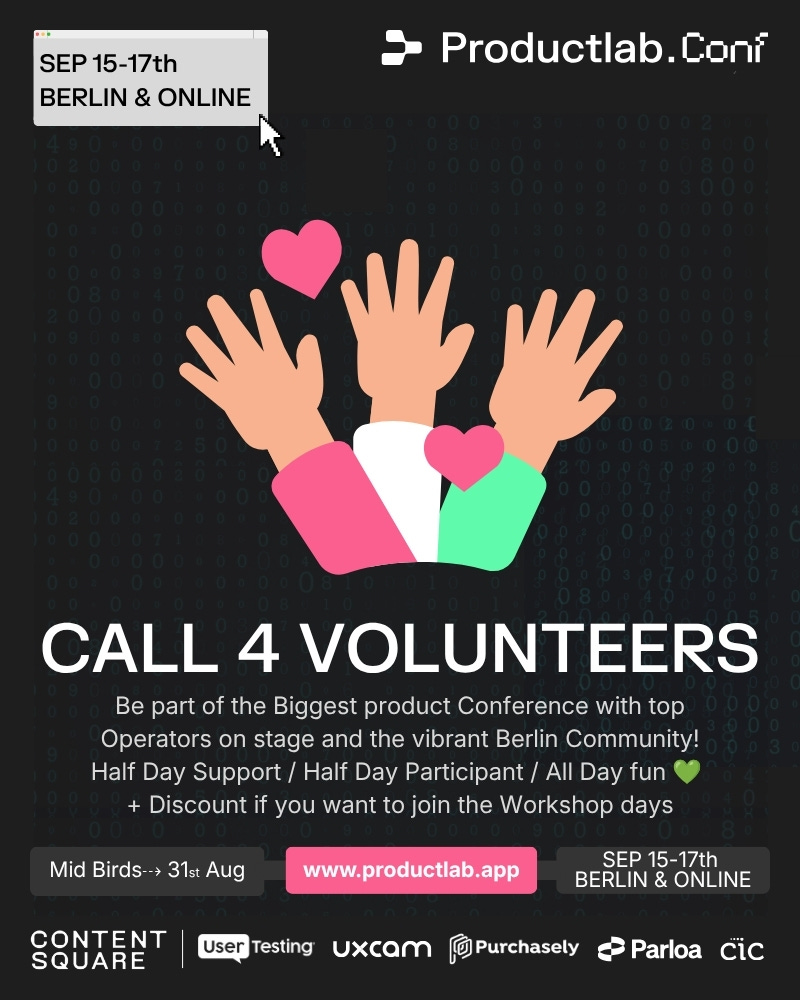
We’re looking for 10 proactive volunteers to help us run our main conference days in Berlin this September 15–17. If you are reliable, sharp, and want to experience a world-class tech event from the inside, this is for you.
Why join the crew?
Learn on the Job: Get full access to keynotes from global product and AI leaders whenever you aren’t on duty.
Network with Pioneers: Work directly alongside the organizing team and rub shoulders with industry speakers.
What you’ll do: Help us handle registration, support the speaker stages, and keep the attendee experience flawless.
🚨 Deadline: We are closing applications as soon as we hit 10 rockstars, with a hard cutoff on June 30th. Apply now to secure your spot!
📰 Product Leaders’ Wisdom
Brought to you weekly by Leila Montazeri
The human element isn’t getting replaced by automation; it’s being forced to step up. This week’s reads dive into why outsourcing your coding, data tracking, and interviews to bots means your personal taste and real human judgment matter more than ever.
Coinbase actually built a bot that takes a raw Figma design and turns it into working, live code without a developer needing to recreate it block by block. Department of Product reveals how they hooked large language models up to their existing design tokens to keep things consistent. If you are tired of losing small design details in the handoff from design to engineering, the step-by-step breakdown of their custom setup is a goldmine.
Sahil Jain built an entire software platform with just a tiny skeleton crew, and his biggest takeaway is a bit upside down: engineering is no longer the bottleneck. Because bots can write the code instantly, the real struggle now is having the restraint to not build every random idea that pops into your head. It is a raw look at why human taste and saying “no” matter way more than actual technical execution right now. Louron Pratt gives us lessons about building during the AI Age.
Product Coalition, shares a sharp, 60-year history lesson on how we stopped talking to actual people. It tracks the shift from old-school 1960s focus groups down to modern dashboards where users are just numbers on a screen. The author pulls no punches about the danger of using AI to run “synthetic” interviews, arguing that if you just stare at graphs and automated summaries, you completely miss the weird, irrational human quirks that make software successful.
💪 Open Roles
Brought to you weekly by Alessia Marchi
🎶 Song of the Newsletter
From our DJ Marco D’Avila
Thanks for the mention!!