


What it was “F*ck Ups in Product”
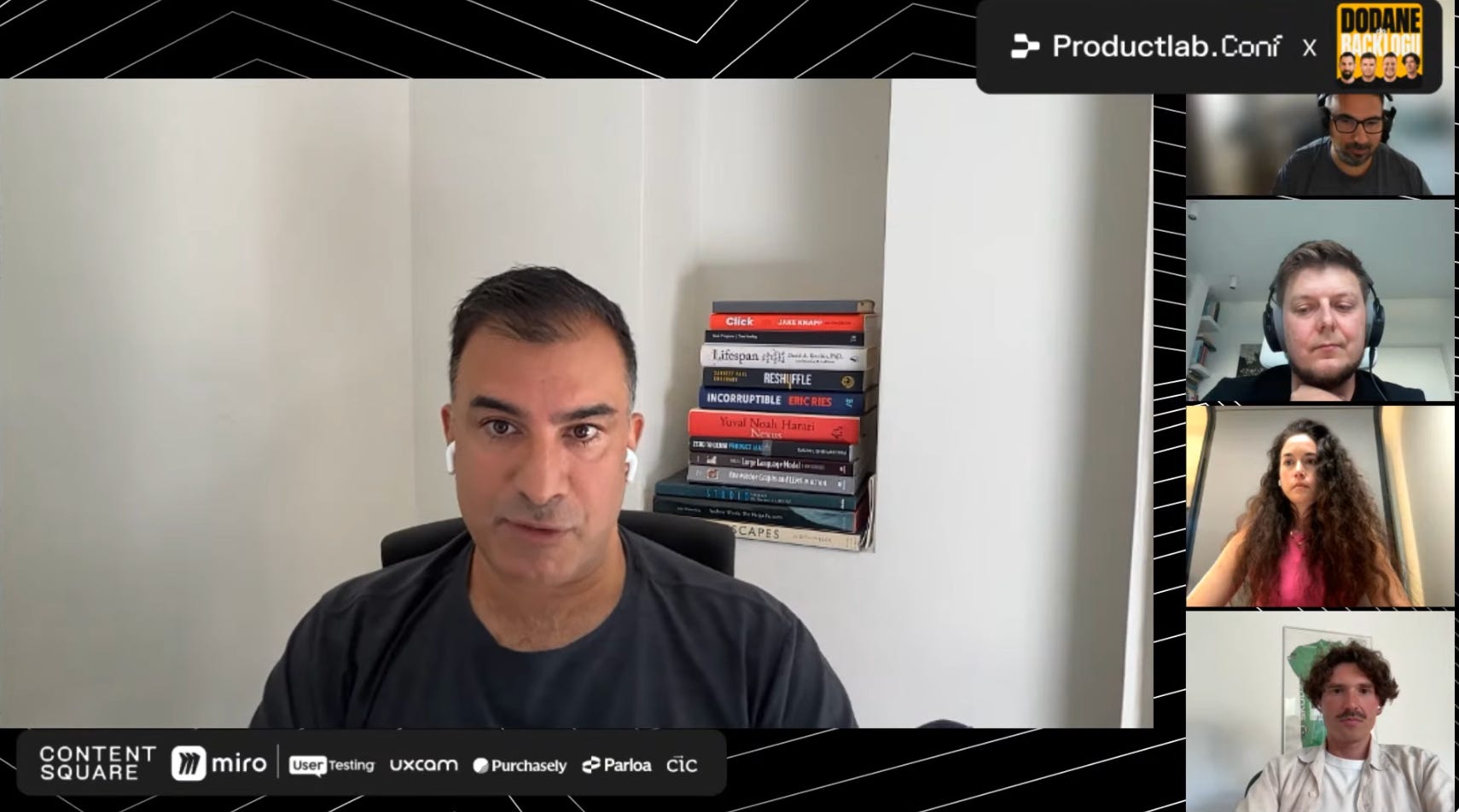
A Product Lab webinar hosted by Dodane do Backlogu Podcast with Ravi Mehta (ex-CPO Tinder, ex-Facebook/TripAdvisor, Reforge) and Michelle Parsons (ex-CPO Hinge, ex-Netflix/Spotify, now building Lora). Deliberate anti-format: no slides, no frameworks, no AI talk, just failures.
The stories
TripAdvisor’s big redesign (Ravi) — A company that ran ~1,000 experiments a year went heads-down for 9–12 months on a rebrand and launched it all at once, no A/B test. Revenue dipped. The culprit: they replaced the ugly-but-familiar filter sidebar with a beautiful “personalization bar.” Filtering dropped 20%, bookings dropped ~20% on that page, single-digit revenue hit company-wide. Millions lost. Lesson: separate form from function; Amazon is ugly and works.
“Just For You” (Ravi) — Same company. Silently swapping in a personalized hotel ranking: +10% revenue. Then they surfaced it, named it, made it the default — revenue fell. Users resented the app deciding for them and felt FOMO about hidden hotels. Identical algorithm, different UX, opposite result. His framing: control matters in proportion to stakes. Netflix can pick for you; a €3,000 holiday or a date cannot.
Netflix’s family profile (Michelle) — Disney+ was coming. The team skipped discovery and went straight to “we need a family profile,” complete with marketing plan and research trips to Asia and India. Families turned out to be far too heterogeneous for one profile with one content set. Months burned. The honest part: she knew, and kept going to placate marketing and content. Sunk cost plus not wanting to be wrong in front of a staffed working group.
Hinge Roses (Michelle) — Roses/Standouts borrowed super-like economics from Tinder and Bumble into an ecosystem built on a different principle. Users read it as “Hinge is paywalling the attractive people.” Then TikTok invented a folk theory that X-ing out your Standouts makes the app surface them — which fed the algorithm false negative signal and made everyone’s experience worse. Years of cleanup.
Marcin’s dating app (2018) — Gamification plus virtual currency. Revenue grew, but from a tiny cohort: proto-influencers farming attention and gifts, then ghosting to pull the audience over to Instagram. Users optimize for the incentive, not the design intent.
Kuba’s CRM — Nearly a year on an ML-driven sales-insights product to move upmarket. Someone finally asked in a room: how many customers do we even have who could buy this? Silence. Also: a viral loop that grew signups 300% while conversion tanked, because it imported the wrong ICP.
Audience — Ruslan: chased whales, lost SMB momentum. Simon (WeRoad): launched their own app, migrated the audience off Meetup, and changed the supply model, and did it in five countries simultaneously. Would now change one thing in one country.
Takeaways worth keeping
Form vs. function is the cleanest heuristic in the whole hour. Redesign the aesthetics, don’t touch the mechanics users have learned.
Same algorithm + different UX = different business result. Naming a feature changes how people judge it.
Copying a competitor’s monetization mechanic into a different ecosystem imports their incentives, not their revenue.
Change one variable at a time. Simon’s story is the textbook version.
Michelle on leadership: at Hinge (80 → ~300 people in two years) she carried a private priority list. Her #20 was someone else’s #1, and nobody could see the ranking. Publish the order and the reasoning, not every detail.
Ravi on meetings: exec and investor meetings are not where you discover the answer. Align beforehand, arrive with a recommendation, and state explicitly whether the meeting is to decide, explore, or inform. Also: learn how each leader consumes information — deck vs. memo, recommendation up front vs. at the end.
Kuba’s addendum: pre-reads should be three bullets and the actual question, not a 13-page AI-generated dump.
Lightning round — “I will never again…”
Ravi: redesign without knowing the customer problem.
Michelle: say yes to everything; ship on a Friday.
Kuba: trust a surface-level signal.
Marcin: assume users want what I designed them to want.
Audience winner: assume the alignment meeting is where alignment happens.
🎡 Most fun
The webinar about failures failed live! ☄️YouTube stream died in the first three minutes, Michelle’s audio dropped twice, including on the final question about her own company. Daniele’s closing line was roughly “regarding fuck-ups, tonight couldn’t have been worse.”
Welcome to UserTesting!
Imagine you’ve just used AI to design, code, and deploy a brand-new feature in record time. It feels like a massive win. But here’s the million-dollar question: Are you running faster toward success, or just sprinting faster in the wrong direction?
With AI drastically lowering the cost of creation, speed is no longer our biggest blocker. The real challenge today is clarity—knowing exactly what is worth building before wasting valuable resources.
That is why we are incredibly excited to announce UserTesting as an Official Sponsor for Productlab.Conf this September 15–17 in Berlin and Online! They are the ultimate antidote to “building in the dark,” helping product teams ground their rapid execution in real, human insight.
👥 The Session You Can’t Miss
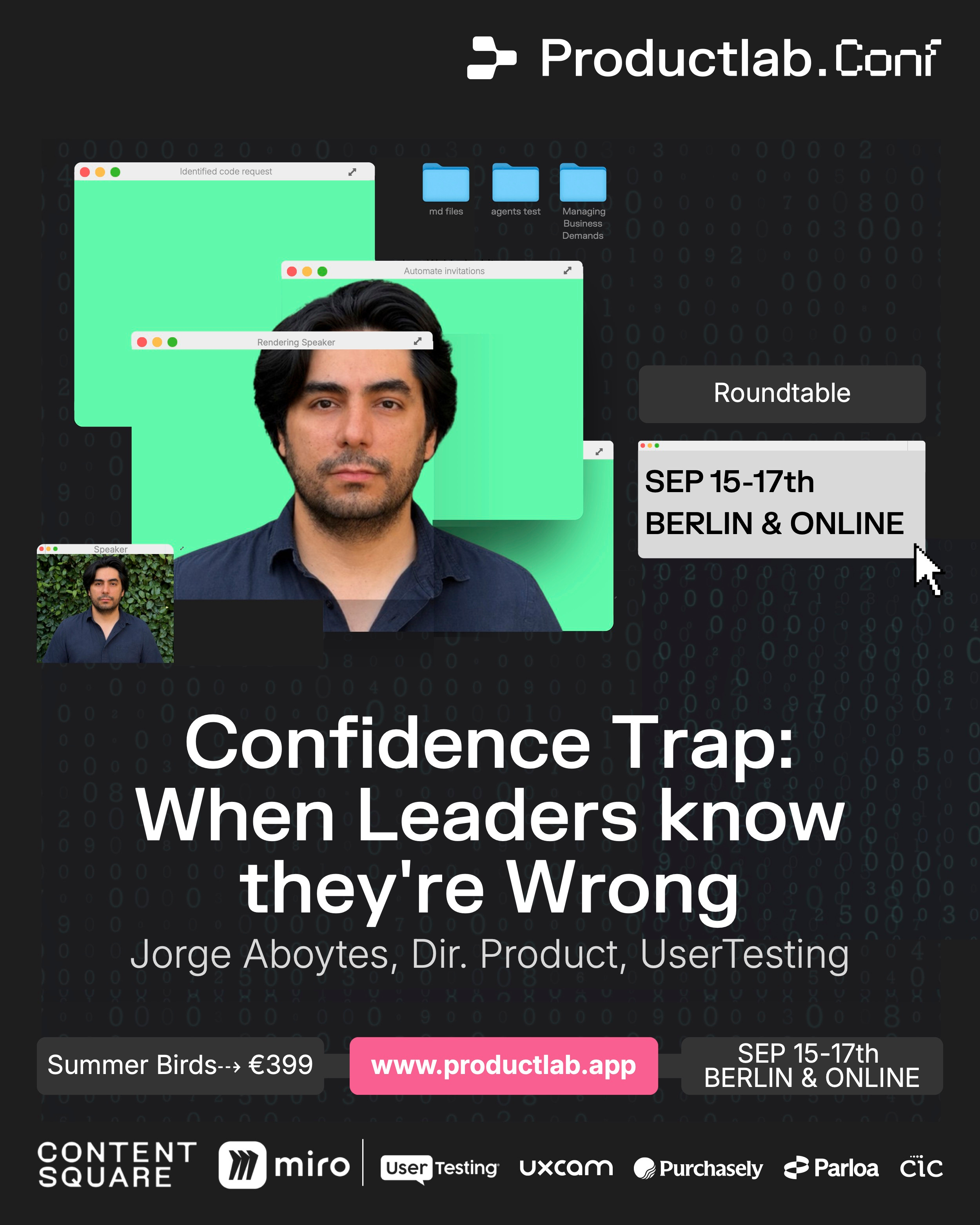
Speaking of validation, we have a brilliant roundtable lined up that tackles this exact dilemma head-on: Confidence Trap: When Leaders Know They’re Wrong
🗓️ 15-17th of September
📍 Berlin & Online
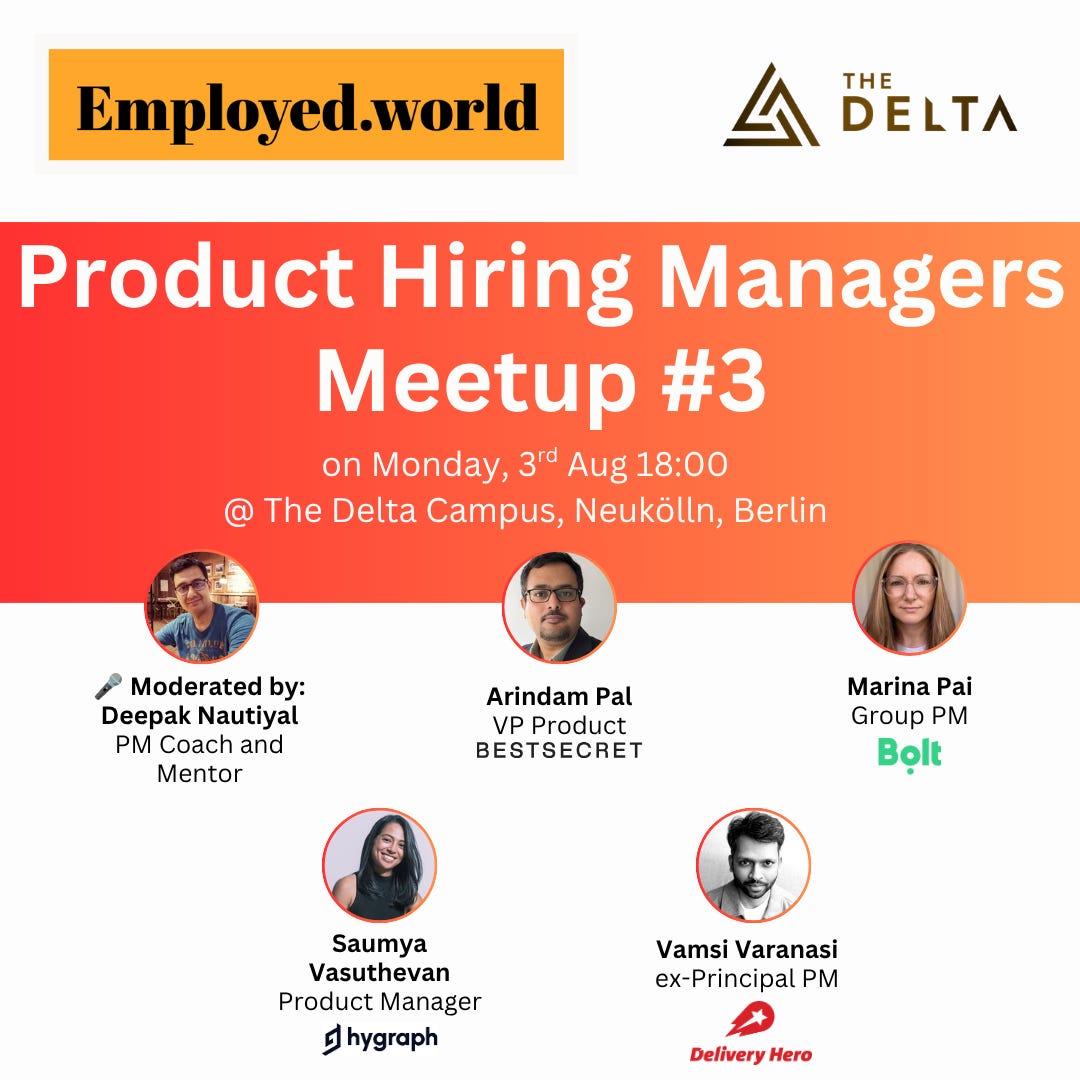
Product Hiring Managers Meetup #3
As AI continues to reshape the tech landscape, the traditional Product Management career ladder is quietly transforming. Managing larger teams is no longer the sole benchmark for seniority; instead, hiring leaders are looking for something much more distinct.
To unpack what it actually takes to get hired or promoted in today’s market, our community partner Employed.world is hosting an exclusive meetup in Berlin. This is your chance to hear directly from the people making the hiring decisions.
🗓️ 3 August 2026, 18:00 - 21:30 CEST
📍 The Delta Campus, Neukölln, Berlin
🎟️ Free for those affected by layoffs (requires approval) / Flexible standard ticket options
📰 Product Leaders’ Wisdom
Brought to you weekly by Leila Montazeri
AI Changed the Game. Your Strategy Should Too.
Artificial intelligence has transformed everything. But there’s a lesson most founders are missing: a good AI product isn’t enough. You need the right strategy.
Do you know which roles are disappearing? Which capabilities are being recombined? And how your growth equation is changing?
Three sharp thinkers answer these questions. Let’s learn from them.
The Beautiful Mess reveals that roles are illusions. What’s real is that capabilities flow across your organization, sometimes concentrated, sometimes distributed, sometimes embedded in tools. AI accelerates these movements. Work doesn’t disappear. It transforms. The real question isn’t what AI does. It’s which judgment and context you’re losing. Because once expertise gets baked into a system, people stop developing it.
A great product is only one of four things you need to reach $100 million. You also need Product-Channel Fit, Channel-Model Fit, and Model-Market Fit. AI breaks all of them. A product that worked yesterday might fail today. Brian Balfour gives you a framework for thinking through these shifts, and spotting when your growth machine is about to break.
Thousands of new AI startups have launched. But 95% of them will never make enough money to survive. Why? Beliūnas is blunt: you need a moat, something competitors can’t copy. Without it, you’re just selling a cheaper commodity. Anyone can build the product now. Almost no one can build the company.
💪 Open Roles
Brought to you weekly by Alessia Marchi
🎶 Song of the Newsletter
From our DJ Marco D’Avila